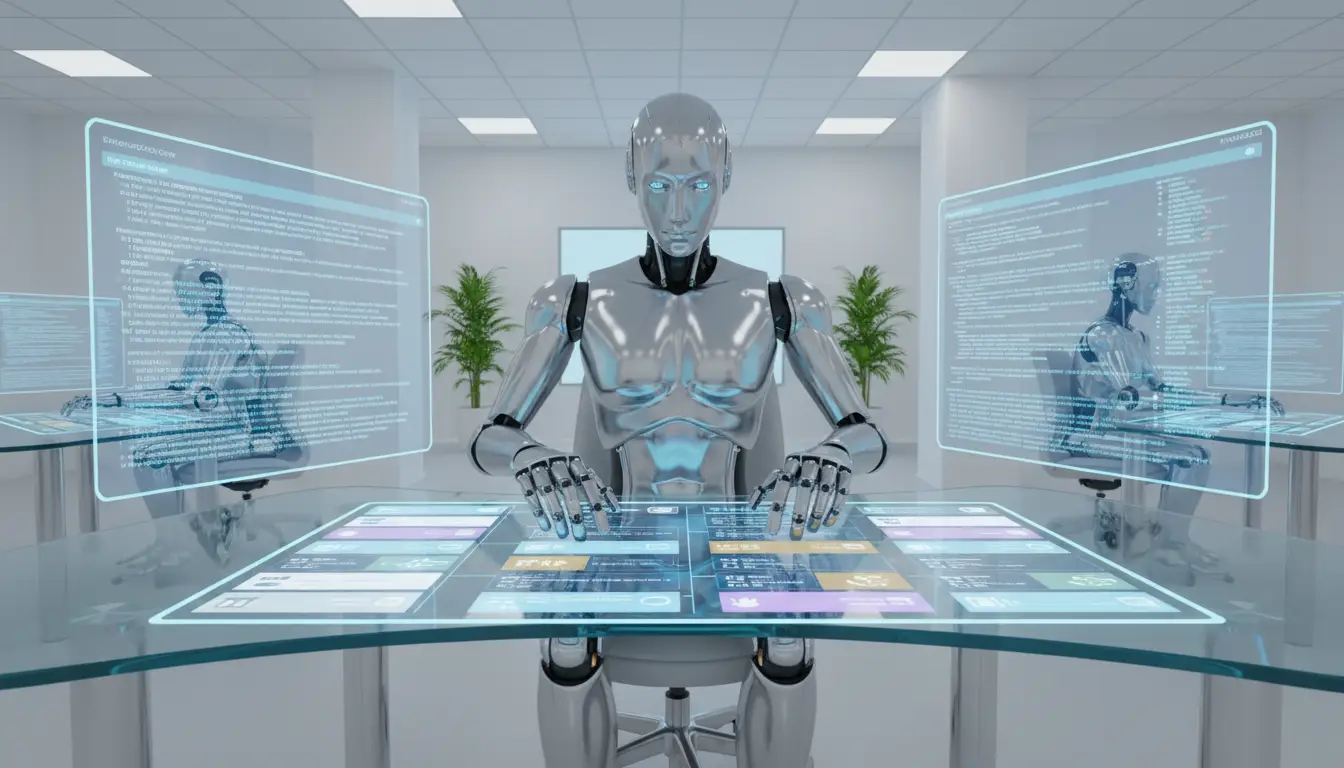
GitHub Actions and other automation tools have revolutionized how open-source projects operate. However, many teams focus on automating code-related tasks like testing and deployments. While valuable, this misses a critical opportunity to automate project maintenance itself. An OSS bot positioned as a maintainer, not just a coder, can drastically improve project health and team efficiency.
The Core Problem: Maintainer Burnout
Open-source maintainers face a chronic challenge: the sheer volume of non-coding tasks. Triage, communication, issue management, and pull request reviews consume significant time. This administrative overhead often leads to burnout and a bottleneck in project progress.
Traditional automation often focuses on CI/CD pipelines, which is coding-centric. It helps get code into the repository but does little for the surrounding workflow. An OSS bot focused on maintenance addresses this unmet need.
The Human Cost of Manual Maintenance
- Time Drain: Every new issue, pull request, or user query requires attention.
- Context Switching: Shifting between coding and administrative tasks disrupts flow.
- Inconsistent Application: Manual processes lead to varied application of guidelines.
- Community Frustration: Slow responses and inconsistent communication can deter contributors.
Shifting Focus: From Code to Context
An autonomous OSS bot should act as an extension of the maintenance team, not a replacement for a developer. Its role is to handle the repetitive, process-driven aspects of project curation. This frees human maintainers to focus on complex problem-solving, strategic direction, and mentorship.
Consider the difference:
- Coder Bot: Focuses on writing, modifying, or refactoring code, often in response to specific instructions. Its outputs are code-based artifacts.
- Maintainer Bot: Focuses on the state of the repository and its interactions. It triages, communicates, guides, and enforces policies without touching the core codebase directly.
What a Maintainer Bot Does:
- Issue Triage: Automatically labels, assigns, and prioritizes incoming issues based on predefined rules or AI analysis.
- Contributor Guidance: Provides instant feedback on pull requests regarding format, tests, or documentation requirements.
- Communication Automation: Responds to common queries, reminds users of project guidelines, and provides status updates.
- Disclosures & Auditing: Logs every interaction and action, ensuring transparency and accountability in the maintenance process.
Why Not a Coder Bot?
While AI can generate code, relying on an autonomous bot to write significant portions of your core codebase presents several challenges:
- Contextual Understanding: High-quality code requires deep understanding of the project's architecture, historical decisions, and future roadmap. Bots excel at patterns, but struggle with nuance.
- Quality Assurance: AI-generated code still requires rigorous human review, testing, and understanding. This doesn't eliminate work; it shifts it.
- Security Implications: Automatically merged bot-generated code could introduce vulnerabilities or regressions if not meticulously vetted.
- Loss of Ownership/Credit: Who owns the code? Who gets credit for contributions when a bot is the primary coder?
An OSS bot's strength lies in its ability to enforce, organize, and communicate, not necessarily in its ability to innovate or design complex software solutions.
The Maintainer Bot in Action: A Practical Example
Consider an OSS bot interacting with a new pull request:
- PR Opened: A contributor opens a pull request.
- Initial Scan: The bot automatically scans the PR for common issues (e.g., missing tests, incorrect commit message format, unformatted code).
- Automated Feedback: If issues are found, the bot comments directly on the PR, outlining specific points for correction and linking to relevant contribution guidelines.
@contributor Thank you for your pull request! It looks like your commit message doesn't follow our guidelines. Please reformat it as 'feat: brief description' (see [CONTRIBUTING.md](link-to-contributing-guide)). Also, please ensure all new code has corresponding unit tests. - Issue Triage: If the PR refers to an issue, the bot might link them and update issue status.
- Human Hand-off: Once automated checks pass, the bot assigns the PR to a human maintainer for deep review, providing a clean, pre-validated submission.
This workflow streamlines the process, reduces friction for contributors, and significantly cuts down the initial review time for human maintainers. The OSS bot acts as the first line of defense and guidance.
Auditability and Transparency
A critical feature of any autonomous bot, especially one acting as a maintainer, is complete auditability. Every action taken by the bot — every label added, every comment posted, every assignment made — must be recorded and publicly visible. This builds trust within the community and with human maintainers.
This isn't just about accountability; it's about transparency. Contributors can see why an action was taken, and maintainers can trace the bot's workflow and interventions. This transparency is a cornerstone of good open-source project governance.
Conclusion: Empowering Human Maintainers
Positioning your OSS bot as a maintainer, not a coder, is a strategic decision that empowers your human team. By automating the crucial, yet often overlooked, aspects of project upkeep, you reduce burnout, improve contributor experience, and allow your core developers to focus on what they do best: building great software. Leverage automation to manage the project, not to write its code, and watch your open-source community thrive.